
编者按:当科学家们拂去龙东谈主头骨上的尘埃,咱们迎来的不仅是一项改写东谈主类演化史的科学冲突,更是一次与旷古东方的深刻对望。这件来自旷古的遗存,将中中语明的地舆舞台推向更深刻的历史维度——在笔墨、青铜与城邦出现之前的数十万年间,这片地皮早已演出过理智生命的壮阔史诗。诚然龙东谈主并非中中语明的径直创造者,但它的存在深刻影响着咱们关于端淑发祥与接续的解析。这段逾越时空的对话,不仅关乎“咱们是谁”,更关乎咱们怎样贯通眼下这片承载过大宗生命试验的东方之地。
北京手艺2025年9月26日凌晨,国外著名学术期刊《科学》发布了由中国多机构团队完成的重磅探究。探究东谈主员通过高精度CT重建与几何款式测量(GMM)分析发现,郧县东谈主头骨在面部平展度、眶上隆凸和颅容量等特征上与黑龙江龙东谈主头骨独揽,而较着离别于耸峙东谈主。探究据此指出,此前被以为是耸峙东谈主的“郧县东谈主”头骨,实质上是与奥妙古东谈主类“丹尼索瓦东谈主”密切相关的“龙东谈主”(Homo longi)支系的早期代表。这一论断不仅将当代东谈主、尼安德特东谈主和龙东谈主支系的分化手艺大幅推前,更在科学维度以外,为咱们大开了一扇回望东方旷古历史的新窗口。
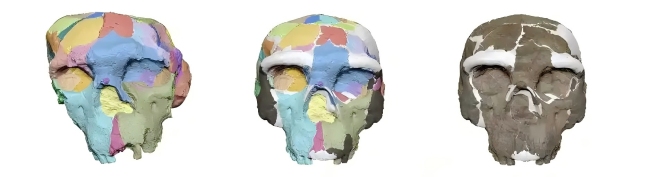
图为“郧县东谈主2号”头骨化石复兴
龙东谈主探究适度依然发布,便在外交媒体激励平凡热议。公众的征询焦点不仅在于其科学真理,更在于其名字本人:“这是咱们的先人吗?”“咱们确实是‘龙的传东谈主’?”事实上,龙东谈主的定名源自其发现地黑龙江省。诚然定名来自地舆成见,但当“龙”这个深植于集体挂念的文化绚烂,与一项改写东谈主类解析的重磅发现相皆集时,便不行幸免地催生出特别科学限制的丰富联想。这并非源于严谨的科学谱系,而是根植于文化热诚的深刻共识。
在东方端淑的集体挂念中,“龙”从来不仅仅生物学的虚拟物种,而是权利、吉祥、民族认可的至高象征。从红山文化的玉龙到紫禁城的九龙壁,从“盘古之君,龙首蛇身”到“水不在深,有龙则灵”,这条神兽连气儿了中中语明的精神谱系。因此,当“龙”与“东谈主”在科学语境中再行皆集时,它不再仅仅一个冷飕飕的学术标签,而成为接通演化史与文化情感的奇妙触点。
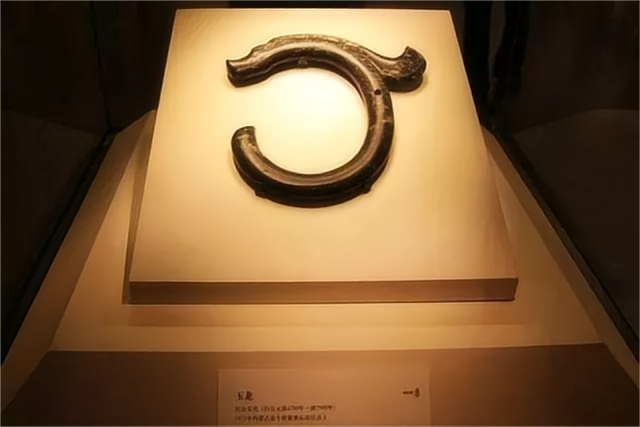
图为“中华第一玉雕龙”
龙东谈主的定名,在上层的地舆逻辑之下,暗合了这片地皮最深层的文化密码。它像一把钥匙,不测间开启了一扇通往集体挂念的大门,让一个旷古的发现,遽然在咱们共同的文化语境中取得了生命与回响。这种文化基因的觉悟,某种进度上反应了咱们在科技高速发展的期间,对自身文化根源的不懈追寻。在环球化海潮中,咱们比任何时候都更需要说明“咱们是谁”,而龙东谈主碰巧提供了一个回望的机会。
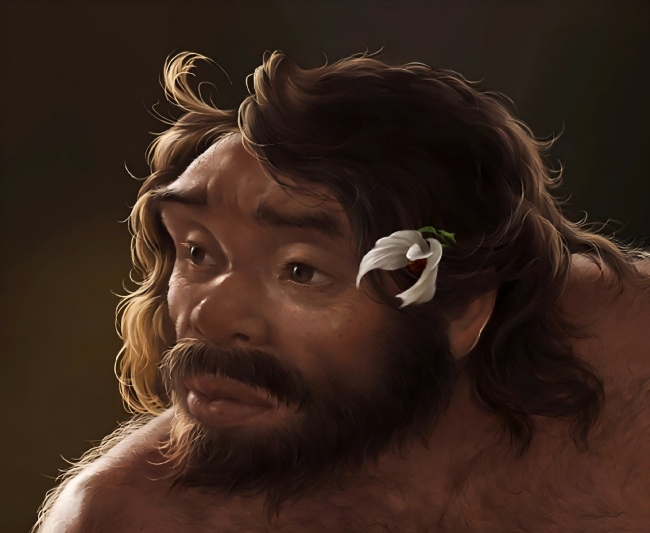
图为艺术家约翰·古尔奇(John Gurche)凭据龙东谈主头骨制作的复兴模子
“咱们是谁”的追问,势必引向“咱们从那儿来”,并最终关乎“咱们眼下的这片地皮阅历了什么”。于是,当视野越过龙东谈主这个名字,一派广袤的地皮偏执背后百万年的时光,便徐徐铺陈开来,引颈咱们去想考一个更深层的问题:这片东方之地,在东谈主类演化的壮阔史诗中,究竟饰演了何如的变装?
对此,龙东谈主化石给出了新的回答。传统不雅点常将东亚视为古东谈主类移动的“特殊站”。然而,以龙东谈主化石为代表的新发现标明,东亚地区很可能是一个充满活力的区域性演化中心。在漫长的更新世手艺,龙东谈主在这片地皮上独处演化了数十万年。他们不仅阅历了冰期与间冰期的严酷历练,更发展出约1420毫升的脑容量——这一数值已经与当代东谈主绝顶。万般迹象标明,龙东谈主在东亚大陆走出了一条与西部欧亚的尼安德特东谈主并行而私有的演化谈路。
这一发现不仅证实了东亚地区具备独处助长理智生命的生态舞台与演化条款,更赋予了这片地皮更深刻的内涵:在中中语明降生之前,这里早已演出过波涛壮阔的理智演化史诗,积淀下远比笔墨历史悠远深厚的史前底蕴。这份逾越百万年的生命挂念,为咱们贯通眼下地皮注入了前所未有的手艺纵深,也让咱们这些自后者,对这片捏续创造遗迹的陈旧圣地生发出更深千里的敬意。

图为即梦AI生成的“旷古中华地面场景”
在文化多元的今天,龙东谈主的故事为咱们想考文化认可提供了新视角。诚然它并未径直告诉咱们“咱们是谁”,但它深刻地辅导着咱们“咱们从何而来”。咱们的先人与龙东谈主相通,都曾是这片地皮上的过客与探索者。他们的存在,丰富了咱们对“东谈主类”这一成见的贯通,也让咱们眼下的地皮因这段深奥的挂念而显得愈加稳重。
诚然咱们大多不是龙东谈主血脉上的后裔,但咱们无疑是这片助长过大宗生命遗迹的地皮的文化接纳者。四肢这片地皮的接纳者,咱们肩负着双重职责:以科学精神解读历史,以文化襟怀讲理挂念。科学让历史讲话,而文化让历史有了温度。在这个科技日月牙异的期间,看管对文化根源的关怀与敬意,或将成为咱们面向异日的首要精神资源。
当来自旷古东方的生命低语穿越时空抵达耳畔,它邀请咱们以更虚心的姿态贯通东谈主类在当然中的位置,对统共也曾存在过的理智生命报以深千里敬意,并以此为基础,迈出走向异日的坚实表率。
撰稿东谈主:何博媛
Brushing Off the Dust of Time: From the Name "Homo longi" to the Origins of Civilization
Editor's Note: As scientists brush the dust from Homo longi skull fossil, we are not only witnessing a scientific breakthrough that rewrites the history of human evolution, but also a profound encounter with the ancient East. This ancient discovery pushes the geographical stage of Chinese civilization to a deeper historical dimension: for the hundreds of thousands of years before the appearance of writing, bronze, and city-states, this land was already the setting for a magnificent epic of intelligent life. Although Homo longi is not the direct creator of Chinese civilization, its existence profoundly impacts how we understand the origin and continuity of civilization. This dialogue across time not only concerns "who we are" but also how we comprehend this Eastern land that has carried countless life experiments.
On September 26, 2025, Beijing time, the internationally renowned academic journal Science published a landmark study completed by a multi-institutional team in China. Through high-precision CT reconstruction and geometric morphometric (GMM) analysis, researchers discovered that the Yunxian Man skull shares features such as a flat face, supraorbital torus, and cranial capacity with the Heilongjiang Homo longi skull, while being significantly different from Homo erectus. The study thus suggests that the "Yunxian Man" skull, previously considered Homo erectus, is actually an early representative of the "Homo longi" (Homo longi) lineage, which is closely related to the mysterious ancient human, the Denisovans. This conclusion not only significantly pushes back the divergence time of the modern human, Neanderthal, and Homo longi lineages, but also, beyond the scientific dimension, opens a new window for us to look back at the ancient history of the East.
As soon as Homo longi research was published, it sparked widespread heated discussion on social media. The focus of public debate was not only its scientific significance but also the name itself: "Is this our ancestor?" "Are we truly 'descendants of the Dragon'?" In fact, Homo longi was named after its discovery location, Heilongjiang Province. Although the name stems from a geographical concept, the combination of "Dragon" — a cultural symbol deeply embedded in collective memory—with a monumental discovery that rewrites human cognition, inevitably inspires a rich imagination that transcends the realm of science. This arises not from a rigorous scientific lineage, but from a profound resonance rooted in cultural psychology.
In the collective memory of Eastern civilization, the "Dragon" is never merely a fictional biological species; it is the ultimate symbol of power, auspiciousness, and national identity. From the jade dragon of the Hongshan culture to the Nine-Dragon Wall in the Forbidden City, from "Pangu, the sovereign, with a dragon head and a snake body" to "water need not be deep, for the presence of a dragon makes it sacred," this divine beast runs through the spiritual tapestry of Chinese civilization. Therefore, when "Dragon" and "Man" recombine in a scientific context, it ceases to be a cold academic label and becomes a marvelous point of contact connecting evolutionary history with cultural emotion.
The naming of Homo longi, beneath its superficial geographical logic, corresponds to the deepest cultural code of this land. It acts like a key, unintentionally opening a door to collective memory, allowing an ancient discovery to instantly gain life and resonance within our shared cultural context. This awakening of the cultural gene reflects, to some extent, our unremitting pursuit of our own cultural roots in an era of rapid technological development. In the tide of globalization, we need to confirm "who we are" more than ever, and Homo longi offers an opportunity to look back.
The question of "who we are" inevitably leads to "where we come from" and ultimately concerns "what this land beneath our feet has experienced". Thus, when the gaze extends beyond the name Homo longi, a vast expanse of land and the million years of time behind it slowly unfold, guiding us to ponder a deeper question: What role did this Eastern land play in the grand epic of human evolution?
Homo longi fossil offers a new answer to this. Traditional views often regard East Asia as a "terminus" for ancient human migration. However, new discoveries represented by Homo longi fossil indicate that East Asia was likely a vibrant, regional evolutionary center. During the long Pleistocene epoch, Homo longi evolved independently on this land for hundreds of thousands of years. They not only endured the severe tests of glacial and interglacial periods but also developed a cranial capacity of about 1420 milliliters—a value comparable to that of modern humans. All signs suggest that Homo longi charted a unique evolutionary path in the East Asian continent, running parallel to the Neanderthals in Western Eurasia.
This discovery not only confirms that the East Asian region possessed the ecological stage and evolutionary conditions to independently foster intelligent life, but also endows this land with a profounder meaning: before the birth of Chinese civilization, a magnificent epic of intelligent evolution had already unfolded here, accumulating a prehistoric foundation far deeper and more enduring than written history. This memory of life, spanning a million years, injects an unprecedented temporal depth into our understanding of the land beneath our feet and inspires a deeper reverence in us, the later generations, for this ancient, sacred place that continues to create miracles.
In today's culturally diverse world, Homo longi story offers a new perspective for contemplating cultural identity. While it does not directly tell us "who we are," it profoundly reminds us "where we came from". Our ancestors, like Homo longi, were once travelers and explorers on this land. Their existence enriches our understanding of the concept of "humanity," and makes the land beneath our feet feel even more substantial because of this profound memory.
Although most people in China are not descendants of Homo longi, we are undoubtedly the cultural inheritors of this land that has fostered countless miracles of life. As inheritors of this land, we shoulder a dual mission: to interpret history with a scientific spirit and to warm memory with cultural breadth. Science allows history to speak, and culture gives history warmth. In this era of rapid technological advancement, safeguarding the warmth and respect for cultural roots may become an important spiritual resource for facing the future.
When the soft murmur of life from the ancient East travels through time to reach our ears, it invites us to understand humanity's place in nature with a more humble attitude, to hold a deep reverence for all intelligent life that has ever existed, and on this foundation, to take solid steps toward the future.